
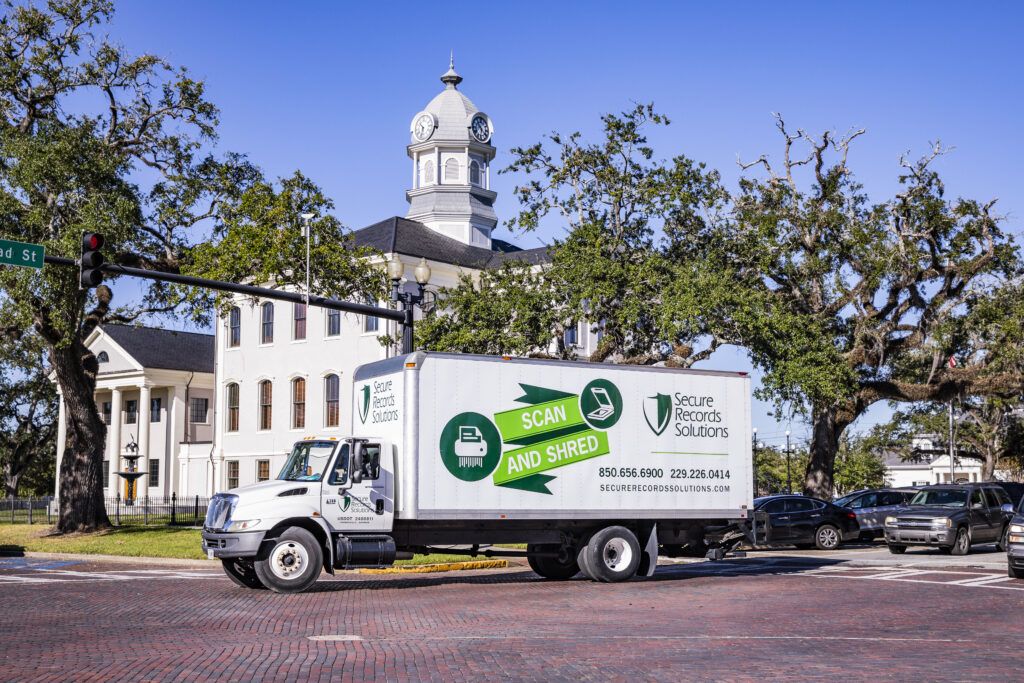
Government agencies across Thomasville, Tallahassee, and Augusta face unique challenges when managing public records. Unlike private businesses, government entities must navigate complex federal, state, and local regulations while maintaining transparency and accountability to the citizens they serve.
The stakes are high. Non-compliant records management can result in legal penalties, failed audits, and eroded public trust. Yet many agencies still struggle with outdated systems, limited budgets, and mountains of paper files that seem to multiply overnight.
Understanding Government Records Compliance
Government records compliance isn’t optional, it’s mandated by law. Federal regulations like the Freedom of Information Act (FOIA) and various state-specific retention schedules dictate exactly how long agencies must maintain different document types. Personnel records, financial documents, and public correspondence each have distinct retention requirements.
The challenge intensifies when you consider the volume of records most agencies generate. From building permits to court documents, police reports to tax assessments, government agencies create and receive thousands of documents daily. Without a structured system, critical records can be lost, misfiled, or accidentally destroyed before their retention period expires.
The Hidden Costs of Paper-Based Systems
Traditional paper filing systems consume valuable office space that could serve citizens more effectively. Storage rooms filled floor-to-ceiling with banker boxes represent both a physical burden and a security risk. Paper records are vulnerable to water damage, fire, unauthorized access, and simple human error.
Consider the staff hours wasted searching for misfiled documents. When a FOIA request arrives, employees may spend days digging through boxes instead of focusing on their primary responsibilities. Our team has witnessed agencies transform their operations by transitioning from paper to digital document management systems.
Common Compliance Pitfalls
Many agencies inadvertently violate retention policies through lack of awareness rather than malicious intent. We’ve identified several recurring issues:
- Premature destruction of records before retention periods expire
- Indefinite retention of documents that should be destroyed, creating unnecessary liability
- Inconsistent filing practices across departments within the same agency
- Inadequate security measures for sensitive information
Building a Compliant Records Management System
Establishing compliant records management begins with a comprehensive retention policy tailored to your agency’s specific requirements. This policy should clearly define what records exist, where they’re stored, who can access them, and when they must be destroyed.
Professional scanning services enable agencies to digitize historical records while maintaining legal admissibility. Digital records offer searchability, backup capabilities, and controlled access—essential features for FOIA compliance and internal efficiency.
Secure Destruction Matters
When retention periods expire, proper destruction becomes just as important as preservation. Simply tossing documents in the recycling bin exposes sensitive information to potential breaches. Certified shredding services provide documented proof of destruction, creating an audit trail that demonstrates compliance.
Our team understands the regulatory landscape facing government agencies throughout Georgia and Florida. We’ve helped municipalities, county offices, and state agencies develop and implement records management programs that satisfy both legal requirements and operational needs.
Taking the Next Step
Compliant records management doesn’t require massive budget increases or complete operational overhauls. Many agencies begin with small pilot programs, scanning a single department’s records, or implementing scheduled shredding services. Agencies begin to expand as they experience the benefits.
The key is starting now rather than waiting for an audit failure or compliance violation to force your hand. Proactive records management protects your agency, serves your constituents, and allows your team to focus on their mission rather than drowning in paperwork.
Call us at (800) 614-0856 today!
Frequently Asked Questions
What federal regulations govern government records management?
Several federal laws regulate government records, including the Freedom of Information Act (FOIA), the Federal Records Act, and various privacy laws. State and local agencies must also comply with state-specific retention schedules and sunshine laws. Each agency should consult with legal counsel to understand their specific obligations.
How long must government agencies in Georgia and Florida retain records?
Retention periods vary by record type and jurisdiction. Personnel files might require retention for 50 years, while routine correspondence may only need three years. Georgia and Florida each maintain state-specific retention schedules that agencies must follow. A comprehensive retention policy should reference these official schedules.
Can digitized records satisfy legal requirements for government agencies?
Yes, when properly executed. Digital records must be created using legally compliant scanning processes that ensure authenticity and integrity. The scans should be stored securely with appropriate backup systems and access controls. Many agencies find that digital records actually improve compliance by enabling better tracking and retrieval.
What happens if a government agency fails a records management audit?
Audit failures can result in legal penalties, loss of funding, damaged reputation, and increased scrutiny from oversight bodies. In severe cases, individual employees may face personal liability. Prevention through proper records management systems is far more cost-effective than remediation after an audit failure.
How should government agencies handle records destruction?
Records must be destroyed according to approved retention schedules using secure methods. Paper documents should be shredded using certified services that provide certificates of destruction. Electronic records require secure data wiping or physical destruction of storage media. Documentation of destruction should be maintained to prove compliance.