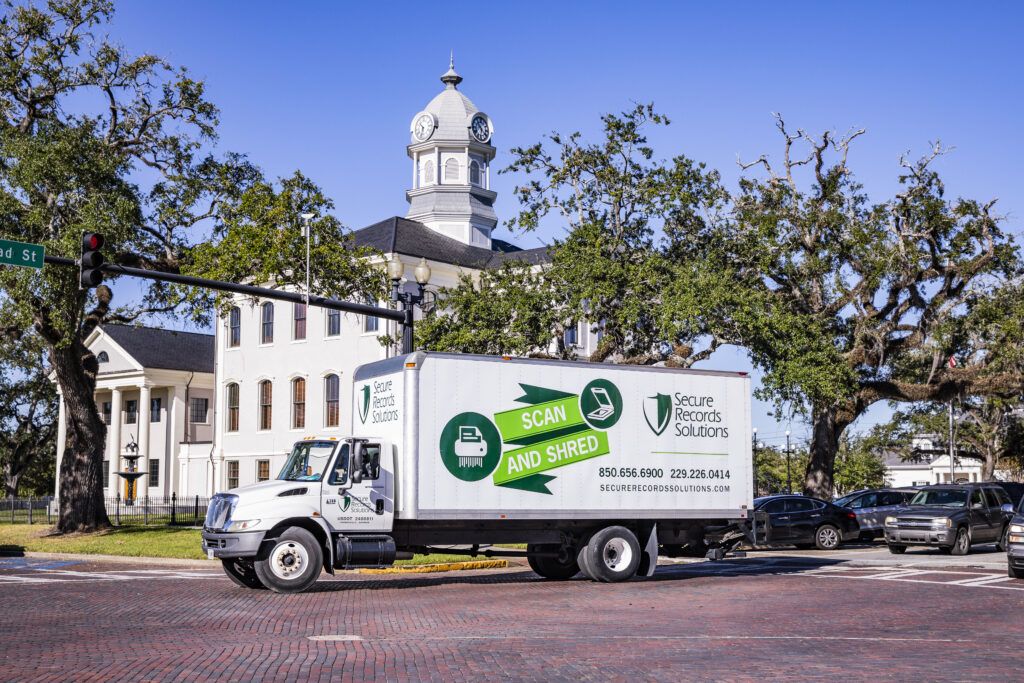

Most organizations shopping for document destruction start with one question: “How much per box?” It’s the wrong starting point. Price tells you almost nothing about whether your records will be destroyed securely, whether you’ll get defensible proof of destruction, or whether the vendor follows protocols that protect your organization during an audit.
The differences between shredding vendors show up in certification, chain of custody, destruction location, and documentation quality. These factors determine whether your vendor is a compliance asset or a liability waiting to surface during your next audit cycle.
NAID AAA Certification: The Security Baseline That Matters
NAID AAA certification is the industry standard for secure information destruction. It covers operational security, employee screening, vehicle tracking, and destruction processes. Certified vendors undergo unannounced audits and maintain documented protocols for every step of the destruction chain.
Non-certified vendors may offer lower pricing, but they operate without third-party oversight. When an auditor or regulatory body asks for proof of secure destruction, certification documentation becomes part of your defense. The absence of certification creates gaps that compliance officers notice immediately.
Ask potential vendors for their current NAID certificate and verification. Certification isn’t optional if you handle protected information under HIPAA, FACTA, or state privacy statutes.
On-Site vs Off-Site Destruction: Understanding the Trade-Offs
On-site shredding happens at your location using mobile destruction trucks. You can witness the process from container to confetti. Off-site destruction transports locked containers to a secure facility where industrial equipment handles destruction in bulk.
On-site works well for high-security environments, one-time purges, or situations requiring visual confirmation. Off-site typically costs less per pound and handles larger volumes more efficiently. Both methods can be secure when proper chain of custody protocols are followed.
The key factor isn’t location—it’s documentation. Whether destruction happens in your parking lot or at a processing facility, you need locked containers, documented transport, and recorded destruction timestamps. We provide both service models because different situations demand different approaches.
When On-Site Makes Sense
Consider on-site destruction for highly sensitive materials, compliance requirements that mandate witness destruction, or organizational policies requiring visual confirmation. Medical practices closing their doors, law firms purging case files, and financial institutions destroying account records often specify on-site for these reasons.
When Off-Site Is the Better Choice
Off-site destruction handles ongoing scheduled service more cost-effectively. If you generate consistent volumes through regular business operations, scheduled container pickups with facility-based destruction typically deliver better economics without compromising security. Our shredding services include both options with identical chain of custody standards.
Chain of Custody: From Container to Destruction
Chain of custody documentation tracks your materials from the moment they enter a secure container until destruction is complete. This paper trail proves continuous control and prevents gaps where materials could be accessed inappropriately.
Strong chain of custody includes locked containers with serialized tags, documented pickup with signature confirmation, vehicle GPS tracking, weight tickets at intake, and timestamped destruction records. Each link in this chain should generate a documented record.
Weak vendors skip steps to reduce costs. They might use unlocked bins, fail to track vehicle routes, or provide generic destruction certificates that don’t reference your specific materials. These gaps create compliance exposure that surfaces during audits or regulatory reviews.
Certificate of Destruction: What Should It Include?
Your certificate of destruction is your proof that materials were destroyed properly. It should include specific pickup dates, container or batch identifiers, weight or volume measurements, destruction method used, facility location where destruction occurred, and certification that destruction met applicable standards.
Generic certificates that simply state “materials were destroyed” provide minimal audit value. Detailed certificates with specific identifiers let you match destruction records to retention schedules, pickup logs, and internal documentation. This specificity matters when you need to demonstrate compliance.
We provide detailed certificates for every destruction event because we understand they’re compliance documents, not administrative formalities. Our team in Thomasville processes certificates within 48 hours of destruction.
Service Radius and Response Time
Local vendors understand regional business patterns and can respond quickly when you need emergency service or have time-sensitive purge requirements. National vendors may offer lower pricing but often route service through regional subcontractors who don’t maintain the same standards.
Our service area covers Thomasville, Tallahassee, and Augusta, with routes designed for consistent pickup schedules and rapid response to one-time requests. This footprint lets us deliver reliability without the complexity of multi-tier vendor relationships.
Distance matters when you have an unexpected compliance deadline, office closure, or immediate destruction requirement. A vendor 200 miles away can’t help when you need service by end of business tomorrow.
Questions to Ask During Your Evaluation Call
Ask these questions before selecting a vendor:
- What is your current NAID certification level, and when was your last audit?
- How do you maintain chain of custody from my location to destruction?
- What information appears on your certificate of destruction?
- Do you use employees or subcontractors for pickup and destruction?
- What is your typical response time for scheduled and emergency service?
- Can you provide client references in my industry?
The answers to these questions reveal operational maturity and whether a vendor prioritizes security or simply competes on price. Price matters, but it should be the last factor you compare after establishing that a vendor meets security and documentation standards.
Organizations in Jacksonville and the surrounding region need vendors who understand that document destruction is a compliance function, not just a waste removal service. We’ve spent 20 years building processes that treat every box like it contains your most sensitive information—because it might. Learn more about office shredding or explore our compliance certifications.
Call us at (800) 614-0856 today!
Frequently Asked Questions
What does NAID AAA certification actually verify?
NAID AAA certification verifies that a Jacksonville shredding company follows documented security protocols, conducts employee background checks, maintains operational security, uses GPS vehicle tracking, and undergoes unannounced facility audits. It’s the only third-party certification specifically designed for the information destruction industry.
Is on-site shredding more secure than off-site destruction?
On-site and off-site destruction can both be equally secure when proper chain of custody is maintained. On-site provides visual confirmation of destruction, while off-site uses industrial equipment that may be more thorough. The security depends on the vendor’s processes, not the destruction location.
What should a certificate of destruction include to satisfy an audit?
A compliant certificate should include specific pickup dates, container or batch identifiers, weight or volume measurements, destruction method, facility location, and certification statement. Generic certificates without specific identifiers provide minimal audit value and may not satisfy regulatory requirements.
How quickly can a local shredding company respond to emergency requests?
Response time varies by provider, but local vendors typically offer same-day or next-day service for emergency requests within their service radius. National vendors routing through subcontractors may require several days. Always ask about emergency response capabilities during vendor evaluation.
Should I choose the lowest price quote for shredding services?
Price should be evaluated after confirming certification, chain of custody protocols, and documentation quality. The lowest price often indicates shortcuts in security processes, employee screening, or documentation. These gaps create compliance exposure that costs far more than the initial savings.